








Where to Buy a Suit: A Complete Guide to Fit, Fabric, and Made-to-Measure Options
Every man should have at least one suit he can rely on.
Whether you need it for a wedding, job interview, business meeting, formal dinner, graduation, or another important occasion, the right suit can make getting dressed remarkably simple.
But knowing you need a suit is the easy part.
Where should you buy one?
You can buy a suit off the rack from a traditional retailer, order a made-to-measure suit based on your measurements, or work with a bespoke tailor to create a garment from the ground up.
The best choice depends on your body, budget, timeline, occasion, and how much personalization you want.
Where Is the Best Place to Buy a Suit?
There is no single best place for every man.
The three main options are:
- Ready-to-wear: Best when you need a suit quickly and standard sizing fits your body reasonably well.
- Made-to-measure: Best when you want the suit adjusted around your measurements with more control over fabric, fit, and design.
- Bespoke: Best when you want a highly individualized tailoring process and are prepared for the additional time and investment.
For many men shopping for weddings, business events, and special occasions, made-to-measure provides a practical balance between personalization and accessibility.
Instead of trying to make your body fit a standard size, measurements can be used to create a suit around your individual proportions.
You can review BDtailormade's Custom Measurement Guide before ordering.
1. Ready-to-Wear Suits
Ready-to-wear, sometimes called off-the-rack, means the suit has already been produced in standard sizes.
You choose the size closest to your body and make alterations when necessary.
Who Should Buy Ready-to-Wear?
Ready-to-wear may be the right choice when:
- You need a suit immediately
- Your proportions work well with standard sizing
- You want to try on several suits in person
- You are buying your first inexpensive suit
- You are comfortable arranging alterations afterward
The biggest advantage is speed. The biggest limitation is fit.
Two men with the same chest measurement may have very different shoulders, arm lengths, waists, thighs, and posture. A standard size cannot account for every variation.
If standard sizing works for you, check our Men's Suit Size Guide before ordering.
2. Made-to-Measure Suits
A made-to-measure suit begins with an established pattern that is adjusted using the customer's measurements.
Depending on the suit, you may also choose details such as:
- Fabric
- Color
- Lapel style
- Buttons
- Lining
- Pockets
- Jacket vents
- Waistcoat style
- Trouser details
- Two-piece or three-piece configuration
Explore our Suit Customization Options to see available jacket, waistcoat, and trouser design details.
Who Should Choose Made-to-Measure?
Consider made-to-measure when:
- Standard jackets fit your shoulders but not your waist
- You frequently need sleeves or trousers adjusted
- You are difficult to fit off the rack
- You are buying a wedding suit
- You want a three-piece suit with a coordinated waistcoat
- You want a specific fabric or color
- You care about personalized details
- You want a suit designed around your measurements
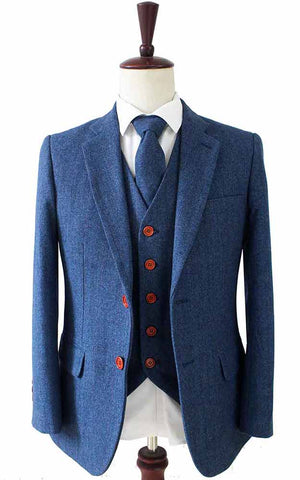
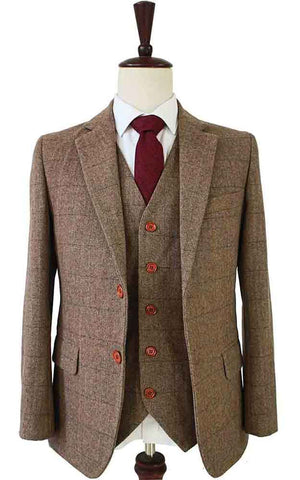
BDtailormade offers suits across tweed, worsted wool, linen, cotton-linen, and Tencel-linen collections.
Shop 3 Piece Suits
Shop 2 Piece Suits
Custom Measurement Guide
Suit Customization Options
3. Bespoke Suits
Bespoke tailoring is the most individualized approach.
Traditionally, a bespoke tailor creates a unique pattern for the individual wearer and may conduct multiple fittings during construction.
This level of personalization can produce exceptional results, but it usually requires more appointments, more time, and a higher budget.
Bespoke is most appropriate for someone who values the tailoring process itself and wants extensive control over the garment.
For many customers shopping online or looking for a practical custom option, made-to-measure may provide the level of personalization they actually need.
What Should You Look for When Buying a Suit?
Where you buy the suit matters, but the label on the door matters less than the finished result.
Focus on five things: fit, fabric, construction, occasion, and versatility.
1. Fit Comes First
An expensive suit that fits poorly will rarely look as good as a more affordable suit with balanced proportions.
A good suit should look tailored without appearing tight.
How Should a Suit Jacket Fit?
Start with the shoulders.
The shoulder seam should sit close to the natural end of your shoulder. The jacket should lie cleanly rather than hanging beyond your frame or pulling inward.
Button the jacket.
The front should close without strong horizontal tension or a pronounced X-shaped crease around the button.
There should be enough room through the chest and upper back to move naturally.
How Long Should a Suit Jacket Be?
Traditional suit proportions generally call for enough jacket length to provide balanced coverage through the seat.
The exact length may vary depending on your height, proportions, and preferred style, but an extremely short jacket can make a formal suit look more casual.
How Long Should Suit Sleeves Be?
A jacket sleeve should usually end around the wrist area and allow a small amount of shirt cuff to remain visible.
The goal is a clean relationship between the hand, shirt sleeve, and jacket sleeve—not a jacket sleeve extending down to the knuckles.
How Should Suit Trousers Fit?
Suit trousers should sit securely at the waist without requiring excessive tightening.
They should have enough space through the seat and thighs for sitting, walking, and moving comfortably.
The leg can taper, but it should not cling to the body.
At the bottom, the trouser should create a clean line over the shoe. Some men prefer little or no break, while others prefer a slight break.
2. Choose the Right Suit Fabric
There is no single fabric that is best for every suit.
The right fabric depends on the season, climate, occasion, and how often you expect to wear it.
Worsted Wool: The Versatile Choice
Worsted wool suits are one of the strongest options for a first serious suit.
Worsted wool has a smooth appearance, holds a tailored shape well, and can work across business meetings, weddings, formal events, and professional occasions.
For one versatile suit, consider:
- Navy
- Charcoal
- Medium gray
- Dark blue
A Navy Worsted 3 Piece Suit can be worn as a complete formal outfit or without the waistcoat for a simpler two-piece look.
Linen: Best for Warm Weather
Linen suits are ideal for summer weddings, destination events, garden ceremonies, beach weddings, and warm climates.
Their natural texture gives the suit a more relaxed appearance than traditional wool.
Popular linen colors include:
- Beige
- Sand
- Light blue
- Gray
- Brown
- Navy
- White
Cotton-Linen: Comfort With More Structure
Cotton-linen suits are useful for men who like the seasonal character of linen but want a slightly more structured appearance.
They can work particularly well for:
- Summer weddings
- Business-casual offices
- Garden events
- Rehearsal dinners
- Daytime celebrations
Textured cotton-linen fabrics, including herringbone, can add depth without requiring a dramatic pattern.
Tencel-Linen: Soft and Refined
Tencel-linen suits are another warm-weather option.
They can provide a softer, more fluid appearance that works particularly well for modern weddings, client dinners, evening events, and occasions where traditional linen may feel too relaxed.
Blue, brown, green, gray, and darker shades can create a polished summer look.
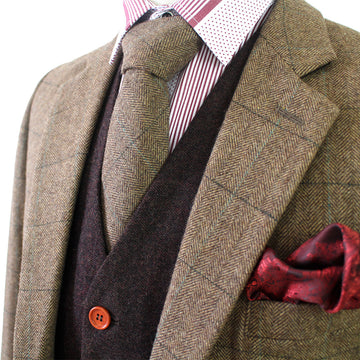
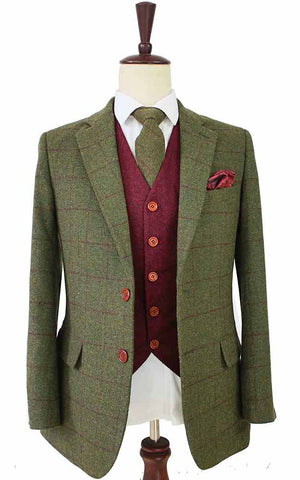
Tweed: Best for Cooler Weather and Textured Style
Tweed suits are a natural choice for fall and winter tailoring.
They work particularly well for:
- Fall weddings
- Winter weddings
- Rustic ceremonies
- Barn weddings
- Countryside events
- Vintage-inspired outfits
- Smart seasonal dressing
Herringbone, checks, overchecks, and speckled textures can give a tweed suit considerable personality.
A three-piece suit is especially effective when you want a distinctive outfit with traditional character.
Classic & versatile tailoring Linen Suits
Summer & destination events Cotton Linen Suits
Lightweight with structure Tencel Linen Suits
Soft warm-weather tailoring Tweed Suits
Fall & winter texture 3 Piece Suits
Jacket, waistcoat & trousers
3. Choose the Right Cut—Not Simply the Slimmest Cut
A good suit cut should create balanced proportions.
That does not automatically mean choosing the tightest or slimmest available suit.
Slim-fit tailoring can work well for some men, but a suit should still provide enough room through the chest, waist, seat, and thighs to move comfortably.
A good cut should:
- Follow your natural shoulder line
- Create shape through the torso
- Allow the jacket to close cleanly
- Keep the lapels lying flat
- Provide comfortable movement
- Create a clean trouser line
The objective is to look tailored—not squeezed into the suit.
4. Buy the Suit for the Occasion
Before asking where to buy your suit, decide where you plan to wear it.
For a Job Interview
Choose something understated and versatile.
Strong options include:
- Navy
- Charcoal
- Medium gray
A worsted suit with a white or light-blue shirt is suitable for many professional environments.
Avoid buying an extremely bold pattern as your only interview suit.
For Business
Consider how formal your workplace actually is.
Traditional industries may favor navy, charcoal, gray, and subtle patterns in worsted wool.
Creative and modern workplaces may allow medium blue, brown, cotton-linen, Tencel-linen, or more visible texture.
The suit should support your professional image without feeling like a costume.
For a Wedding Guest
Start with the dress code.
Navy, blue, gray, brown, and green can all work depending on the season and venue.
For summer weddings, consider linen or cotton-linen.
For fall and winter weddings, worsted wool, tweed, and herringbone are strong choices.
Do not try to outdress the groom.
For the Groom
The groom has more reason to consider a made-to-measure three-piece suit.
The waistcoat adds distinction, makes the outfit feel more ceremonial, and keeps the groom looking polished after the jacket is removed.
The fabric should match the season:
- Linen or Tencel-linen for summer
- Cotton-linen for spring and warm-weather weddings
- Worsted wool for versatile formal tailoring
- Tweed for fall, winter, and rustic weddings
For Formal Evening Events
Check the invitation carefully.
A dark suit works for many formal occasions, but a black-tie event traditionally calls for a tuxedo rather than a standard business suit.
For black-tie occasions, explore our Tuxedo Collection or the Classic Black Tuxedo Worsted 3 Piece Suit .
5. Think About How Often You Will Wear It
Your first suit should usually be versatile.
If you only own one suit, navy or medium-to-dark gray is easier to reuse than an unusual color or bold check.
A three-piece version offers additional flexibility because you can wear:
- Jacket + waistcoat + trousers
- Jacket + trousers
- Waistcoat + trousers
- Jacket with contrasting trousers
After you own the basics, you can add more seasonal fabrics and distinctive colors.
Is It Safe to Buy a Suit Online?
Yes—provided you understand the sizing or measurement process.
Before ordering a suit online, check:
- How sizing works
- Whether made-to-measure is available
- Which measurements are required
- Whether measurements should be body or garment measurements
- Production timeline
- Delivery timeline
- Return or adjustment policies
- Fabric information
- Product photographs
When ordering made-to-measure, follow the seller's measurement instructions exactly.
Do not add extra inches because you want a comfortable fit unless the measurement guide specifically tells you to do so.
Using standard sizing? Check the Standard Size Guide.
Ordering made-to-measure? Follow the Custom Measurement Guide.
How Do You Measure Yourself for a Suit at Home?
Using a soft measuring tape, take the measurements requested by the tailor.
BDtailormade's measurement system covers key areas such as:
- Neck
- Shoulders
- Sleeves
- Biceps
- Wrist
- Chest
- Stomach
- Waist
- Hips
- Jacket length
- Trouser length
- Thigh
Whenever possible, ask another person to help.
Stand naturally and record your actual measurements. Do not suck in your stomach, expand your chest, or pull the measuring tape unnecessarily tight.
Accurate information gives the tailor a better starting point.
Should You Buy a Two-Piece or Three-Piece Suit?
A two-piece suit is the most straightforward choice for business, interviews, and general formal wear.
A three-piece suit adds a waistcoat and creates a more distinctive appearance.
Choose a three-piece suit when:
- You are the groom
- You attend formal events
- You want more outfit combinations
- You like traditional menswear
- You want to stand out without wearing a tuxedo
- You want the outfit to remain polished after removing the jacket
Because the waistcoat is optional, a three-piece suit can still be worn as a standard two-piece suit.
That makes it more versatile than it may initially appear.
What Color Suit Should You Buy First?
For most men, start with navy.
A navy suit can work for:
- Weddings
- Interviews
- Business meetings
- Formal dinners
- Graduations
- Celebrations
- Professional events
For a classic starting point, see the Navy Worsted 3 Piece Suit .
Charcoal and medium gray are strong alternatives.
After the first versatile suit, consider medium blue, brown, green, checks, tweed, linen, or another option that suits your wardrobe.
What Makes a Suit Worth Buying?
A good suit is not defined by one expensive material, a famous label, or an aggressively slim cut.
A suit is worth buying when:
- It fits your body well
- The fabric suits the climate
- The construction suits the occasion
- You feel comfortable moving in it
- The color works with your wardrobe
- You can realistically wear it again
- The design reflects your personal style
A beautifully fitting suit can make getting dressed easier because you already know the proportions work.
That confidence matters whether you are walking into an interview, standing at the altar, giving a presentation, or attending an important event.
Where Should You Buy Your Next Suit?
Choose ready-to-wear when speed and convenience matter most.
Choose bespoke when you want the traditional high-end tailoring process and extensive individualization.
Choose made-to-measure when you want a suit created around your measurements while retaining the ability to choose fabric, color, number of pieces, and important styling details.
At BDtailormade, you can explore made-to-measure three-piece and two-piece suits across tweed, worsted wool, linen, cotton-linen, and Tencel-linen for weddings, business, and formal occasions.
Start with the occasion.
Choose the fabric.
Choose the color.
Then focus on fit.
The best place to buy a suit is ultimately the place that can give you a suit you will actually enjoy wearing.
Shop Men's Suits
Best Selling Suits
3 Piece Suits
2 Piece Suits
Customization Options
Custom Measurement Guide
Contact Our Team
Frequently Asked Questions
Where Should I Buy My First Suit?
Look for a retailer or made-to-measure service that provides clear sizing information, suitable fabrics, and a style you can wear across several occasions. Navy or gray is usually a practical first color.
Is Made-to-Measure Better Than Off-the-Rack?
Made-to-measure offers more personalization because the suit is adjusted using your measurements.
Ready-to-wear can still work very well when standard sizing already fits your proportions and necessary alterations are completed.
What Is the Best Fabric for a First Suit?
Worsted wool is one of the most versatile options because it provides a clean tailored appearance and can work for business, weddings, and formal events.
What Suit Is Best for a Summer Wedding?
Linen, cotton-linen, Tencel-linen, and lightweight wool are strong options.
Choose the fabric based on venue, temperature, and dress code.
What Suit Is Best for a Fall or Winter Wedding?
Worsted wool, tweed, and herringbone are useful cooler-weather options.
Brown, navy, charcoal, green, and other deeper shades work naturally in fall and winter.
How Should a Suit Jacket Fit?
The shoulders should follow your natural shoulder line, the chest should lie cleanly, and the jacket should button without significant pulling. You should still be able to move comfortably.
How Should Suit Pants Fit?
Suit trousers should sit comfortably at the waist and provide enough room through the seat and thighs.
The leg should fall cleanly toward the shoe without excessive bunching.
Is a Three-Piece Suit Worth Buying?
Yes, particularly for weddings and formal events. The waistcoat adds distinction, and the suit can later be worn without the waistcoat as a standard two-piece.
Can I Buy a Made-to-Measure Suit Online?
Yes. Carefully follow the measurement system provided by the tailor and double-check important measurements before ordering.
What Color Suit Is Most Versatile?
Navy is one of the most versatile choices, followed by charcoal and medium gray. These colors work across professional, wedding, and formal settings.
How Many Suits Does a Man Need?
A man who wears suits only occasionally may need one versatile navy or gray suit. Men who wear tailoring regularly can build a rotation based on season, workplace, and social events.
Should I Buy a Suit or a Tuxedo?
Choose a suit for business, interviews, weddings, cocktail events, and general formal wear.
For an invitation that specifies black tie, explore a tuxedo.